The shift towards renewable energy has made solar panels a popular addition to homes and businesses alike. Installing a solar energy system is a significant financial investment, one that promises reduced electricity bills and a smaller carbon footprint. However, a common misconception is that solar panels are entirely "set it and forget it." While they require minimal upkeep compared to other energy systems, regular maintenance is essential to ensure they operate at peak efficiency.
Why Solar Panel Maintenance is Crucial
Solar panels work by allowing light into the solar cells. The more light that hits a panel, the more power it will generate. When dust, dirt, bird droppings, or snow cover the panels, they block sunlight, directly reducing the system's energy output. Studies show that heavily soiled panels can lose between 15% to 25% of their efficiency. Regular cleaning and maintenance not only protect your return on investment but also extend the overall lifespan of the system, preventing localized "hot spots" that can permanently damage the cells.
How Often Should You Clean Your Solar Panels?
The frequency of cleaning depends heavily on your geographic location and local environment. As a general rule, cleaning them once or twice a year is sufficient for most residential systems. However, you may need more frequent maintenance if you live in:
High-Dust Areas: Regions prone to dust storms or located near dirt roads.
Wooded Areas: Properties surrounded by trees will experience heavy leaf fall, sap, and bird droppings.
High-Pollution Zones: Urban or industrial areas where smog and exhaust particles settle on the glass.
Low Rainfall Climates: Areas that do not receive enough natural rain to wash away loose dirt.
The Impact of Dirt, Dust, and Bird Droppings
Not all dirt is created equal. While a light layer of dust might only reduce output by 1-2% and will easily wash away with the next rain, bird droppings are particularly problematic. They are opaque, highly acidic, and tend to stick firmly to the glass. If a string of solar cells is wired in a series, shading from a single large bird dropping on one panel can drag down the performance of the entire string. Similarly, autumn leaves or heavy snow build-up can completely halt energy production until removed.
DIY vs. Professional Solar Panel Cleaning
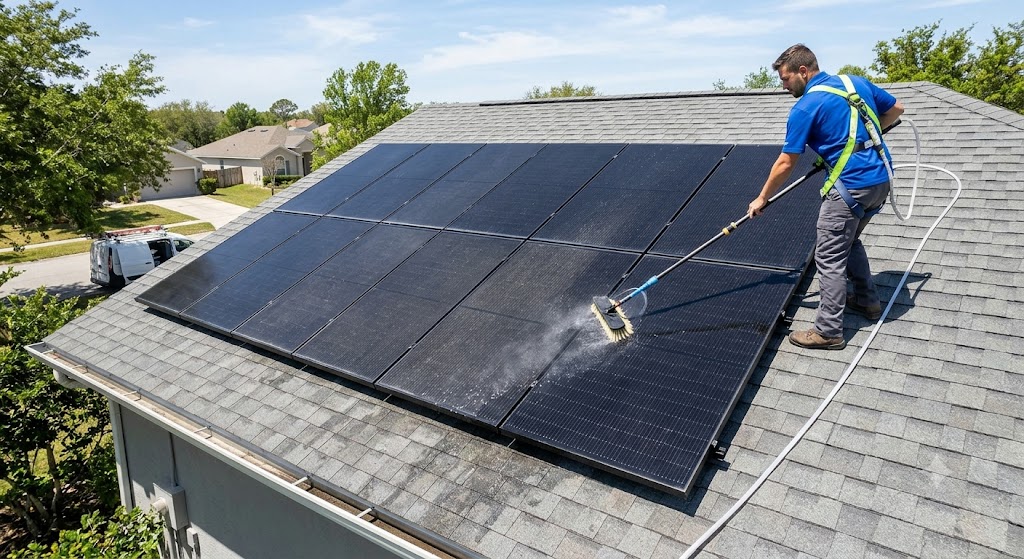
For many homeowners, cleaning solar panels can be a DIY weekend project. However, safety should always be the top priority. If your panels are mounted on a steep roof or are difficult to access, it is always safer and more efficient to hire professional services like MySolarCare. Professionals possess the proper safety harnesses, specialized soft-bristle brushes, and de-ionized water systems that prevent hard water spots from forming on the glass.
Step-by-Step Guide to Safely Cleaning Panels
If you choose to clean them yourself, follow these vital guidelines to avoid voiding your warranty or damaging the equipment:
Timing is Everything: Clean your panels early in the morning, late in the afternoon, or on an overcast day. Hot glass can shatter if suddenly sprayed with cold water, and rapid evaporation can leave soapy residue behind.
Shut Down the System: Always refer to your manual and turn off the system before beginning any maintenance to ensure electrical safety.
Use the Right Tools: Never use abrasive sponges, steel wool, or harsh chemicals. A soft-bristle brush attached to an extension pole and a squeegee are ideal.
Avoid High Pressure: Do not use a high-pressure power washer. The intense pressure can force water under the seals of the panel frame, causing irreversible water damage and electrical shorts.
Water Quality: If your local tap water is "hard" (rich in minerals), consider using a squeegee to dry the panels thoroughly to prevent mineral deposits from baking onto the glass.
Monitoring Your System's Performance
Beyond physical cleaning, monitoring your system's digital output is the best way to catch maintenance issues early. Most modern solar inverters come with a mobile app or web portal. Make it a habit to check your energy production weekly. If you notice a sudden, unexplained drop in power output during sunny weather, it indicates a problem. This could be severe soiling, a blown fuse, a tripped breaker, or a malfunctioning micro-inverter.
Inspecting for Physical Damage
At least twice a year, perform a visual inspection of your solar array from the ground. Look for:
Micro-cracks or shattered glass: Usually caused by severe hail, falling tree branches, or golf balls.
Pest Infestations: Birds and squirrels love to nest in the warm, protected space beneath the panels. They can easily chew through critical wiring. Installing a pest guard (mesh wire around the array) is a highly recommended preventative measure.
Mounting Integrity: Ensure that the racks and rails holding the panels remain firmly attached to your roof, with no signs of severe rust or loose bolts.
Conclusion
Proactive care is the secret to getting the most out of your solar panels. By keeping an eye on your system's output, scheduling regular cleanings, and conducting seasonal visual inspections, you ensure that your green energy investment continues to pay off for decades. Whether you choose the DIY route or rely on professional maintenance from MySolarCare, a clean solar panel is a profitable solar panel.
tiile discription do my sollsr ke luye dixcription
Related Blogs
No related blogs yet.